

Marketing for People Who Don’t Like Marketing
Strategic Personalization – Turning Resistance into Revenue
Is your marketing talking to the wrong generation?
The traditional approach that worked with Boomers not only fails with Millennials and Gen Z, it actively repels them.
Today’s buyers are skeptical of authority and allergic to pressure. They expect to do their own research. They move between stages at their own pace and in the order that suits them, trust peer reviews over sales pitches, and quickly tune out one-size-fits-all messaging.
Traditional marketing is noise to them, and they are adept at filtering out the noise. You need to stop adding to the noise.
“How?” You might ask.
The future belongs to businesses that stop adding to the noise by guiding, rather than pushing. A business can turn resistance into revenue by using marketing that people want to engage with.
Strategic personalization is how you make that shift. It’s the difference between adding to the noise and creating pathways your best customers are eager to follow. And strategic personalization is not, “Dear {first_name}.”
While your competitors keep pushing, you have an opportunity to break through the noise with a people-first, journey-aware approach that turns curiosity into commitment, that converts resistance into revenue.

What is Strategic Personalization?
Strategic personalization uses deep knowledge of your ideal customers’ role, needs, and stage in the buying journey to deliver the right message at the right time. It combines customer avatars, buyer’s journey mapping, and data-driven insights to replace push-style marketing with tailored pathways that build trust and drive growth.
“Stop selling. Start helping.” ~ Zig Ziglar
Push Marketing vs. Tailored Pathways
If it’s not strategic, it’s not marketing. And nothing says “not strategic” quite like traditional push-marketing tactics trying to strong-arm sophisticated buyers into a quick “yes.”
Push marketing is any approach built around broadcasting your message and pressing for a sale, regardless of where the buyer is in their decision process. It’s the digital equivalent of an over-eager car salesman: loud, pushy, and driven by the seller’s priorities. It’s urgent countdown timers that mysteriously reset. It’s guilt-trip follow-ups when you don’t respond. It’s condescending lines like, “You’d be crazy not to take this deal.”
This inside-out approach worked when buyers had fewer options; when Boomers were new to the internet, and they looked for guidance. Now, it signals desperation.
“People don’t buy when they understand you. They buy when they feel understood.” ~ Andrew Sobel
How Tailored Pathways Are Different
Tailored pathways are built from the outside in. They embrace the idea that different people need different things at different times. Instead of shouting the same message at everyone, inside-out, you guide prospects based on who they are, where they are in their decision process, and what they actually need, outside-in.
Think of it this way: push marketing is akin to using a megaphone in a library. Tailored pathways are the smiling librarian who knows your name, understands what you are looking for, and hands you the book that answers your question.
| Push Marketing | Tailored Pathways | |
| Funnel | Linear, push-based | Non-linear, responsive |
| Personalization | “Dear {First Name}” only | Content matched to need and journey |
| Trust | Sales pressure | Valuable micro-transactions |
| Outcome | Low engagement, high churn | High-value leads, increased average order size, and improved LTV |
When we shifted a client’s lead nurturing from push to tailored pathways, their conversion rate doubled and their average order value improved by 30% in three months.
The Mid-Funnel is Where Skeptics Become Buyers
Most businesses obsess over top-of-funnel traffic and bottom-of-funnel conversions while neglecting the middle. The mid-funnel is your opportunity to break through, as it’s where strategic personalization can convert resistance into revenue.
The mid-funnel is where prospects ask:
- Can I trust these people with my business?
- Do they understand me and my situation?
- Will this solve my problem or create new ones?
“Trust is built in drops and lost in buckets.” ~ Kevin Plank
Handled well, this is the stage where cautious prospects begin to lower their guard and open the door to a relationship.
Value is exchanged in the mid funnel, but these aren’t financial transactions; they’re relationship transactions. Reading a case study. Watching a product demo and downloading an implementation guide. Each small “yes” makes the next “yes” easier. This is where micro-transactions of increasing value matter.
Generic content produces generic engagement. Strategic personalization produces momentum.
Strategic Personalization Is More Than “Dear First Name”
Using someone’s name is table stakes. This level of personalization is expected. Strategic personalization is delivering the right message, at the right time, to the right person.
A startup founder choosing their first CRM has completely different concerns from a Fortune 500 VP replacing an existing system. Heavy category users need advanced insights; first-time buyers need foundational education.
When you meet people with the right message at the right time, you replace resistance with interest. And interest is the first step to converting resistance into revenue.
Modern buyers expect relevance, and they can smell lazy automation. Superficial personalization may grab attention, but relevant information creates value.
“In marketing, your greatest enemy is not your competition—it’s indifference.” ~ David Ogilvy
Building Tailored Pathways That Convert
1. Segment and Map Personas
Strategic personalization starts with two tools:
- Customer avatar – The “who” and “why”: demographics, psychographics, pain points, desired outcomes. Build it around your best customers, the 20% who drive 80% of your revenue.
- Buyer’s journey map – The “how” and “when”: awareness, consideration, decision, and implementation stages. Your prospects may move non-linearly, but they’ll touch all the stages, and you need to be ready.
From there, create segments based on:
- Role (e.g., CFO vs. Marketing Director)
- Company stage (startup urgency vs. enterprise caution)
- Sophistication level (heavy category users vs. first-time buyers)
When content feels tailor-made, prospects stop comparison shopping.
2. Design Micro-Transactions of Increasing Value
Use your journey map to guide prospects naturally from one stage to the next.
- Awareness – Industry-specific blog posts, fun quizzes or quick assessments, educational guides – they are just getting started.
- Consideration – Role-specific resources, stage-matched case studies, comparison frameworks – they’re doing their research.
- Decision – Detailed implementation guides, ROI calculators, live demos tailored to their needs – it’s time to choose.
The progression should feel supportive, not salesy. It’s about what they need, not what you need. If you deliver value to them, they will deliver value to you.
3. Deliver the Right Message at the Right Time
Make your avatar and journey map operational with behavioral triggers:
- CFO downloads your ROI guide → send finance-focused content.
- Startup founder engages with scaling resources → share growth-stage case studies.
- A top quintile customer clicks a link in an email and buys the product → send a thank you email with ‘how-to’ information about the product.
- Enterprise buyer spends time on compliance pages → follow up with governance materials.
Match the message to the journey stage and sophistication level (avatar) to deliver value that matches who they are and where they are in their journey.
4. Keep It Current
Your market evolves. Your understanding deepens. So should your personalization.
- Review your marketing against your avatars and journey maps quarterly.
- Update avatars and journey maps as your customer profile evolves and when buying cycles shift.
- Track which assets move the right people forward to make data-driven decisions.
What are the signals that tell you you need an update? Falling engagement, longer sales cycles, and declining time on page all suggest that your top customers are asking questions your content doesn’t answer.
From Assumptions to Evidence
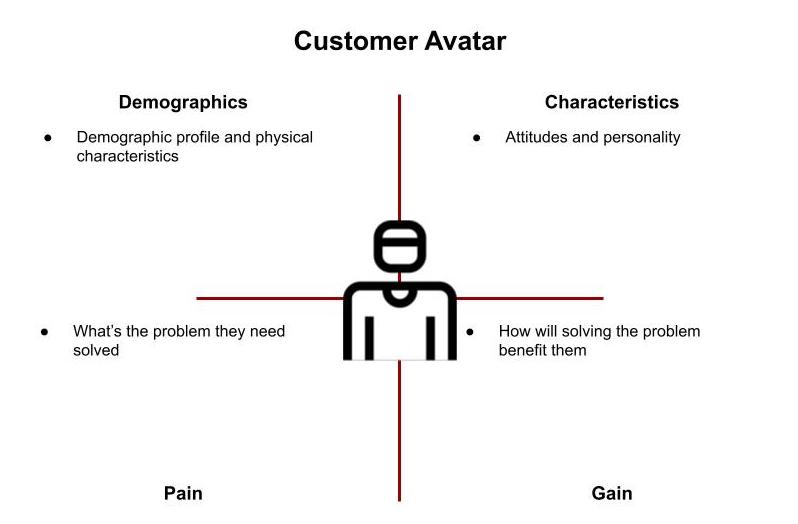
DIY avatars and journey maps are a good start, but they’re often based on assumptions or feedback from your most vocal, not most valuable, customers.
A data-driven approach will show you what your best customers actually value, how they buy, and which triggers move them forward. That shift from subjective assumption to objective evidence adds the ‘strategic’ to strategic personalization.
Our Marketing Sage Advantage service delivers this insight by analyzing real customer interviews to uncover what you might miss, giving you a clear, actionable profile of your best customers. It’s how you stop wasting effort on people who were never going to buy and start converting the ones who will value what you are offering and deliver value to you in kind.

AI as Amplifier, Not Magic Button
AI is top of mind right now. And AI can have a role in strategic personalization. But be careful. AI will magnify what you’ve got. If your foundation is weak, AI will not fix it. With the right foundation, an AI’s objective POV will help you see and dismantle the barriers that keep good prospects from saying yes.

Use first-principles prompting to explore what truly motivates your best customers. Then rebuild your marketing to meet those needs. The result is tailored pathways that convert resistance into revenue.
From Resistance to Revenue: The Shift Modern Buyers Demand

The businesses winning today are the ones who are using strategic personalization to turn resistance into revenue. They’ve left behind the pushy, generic tactics that buyers tune out, replacing them with tailored pathways high-value buyers are eager to follow.
“The choice is simple. Keep pushing and hope, or start guiding and grow.” ~ James’ism
Strategic personalization:
- Speaks to your customers’ context and desired outcomes
- Guides and supports prospects through their natural journey
- Builds trust without adding to the noise
- Creates measurable competitive advantages
Your customers don’t want to feel like they’re just another email address in your CRM. They want to feel understood, valued, and confident in their decision to work with you.
When you deliver that experience consistently, you don’t just win customers, you turn skeptics into advocates, and that’s how you turn resistance into sustained revenue growth.
Ready to transform from pushy to personalized?
Our Marketing Sage Advantage service helps you build data-driven customer avatars and journey maps that become the foundation for strategic personalization, turning your best customer insights into sustainable competitive advantage.
Related Posts
-
Why Your Marketing Isn’t Working
Discover how marketing momentum breaks the Sisyphean cycle and watch your business grow.
-
Why Marketing Breaks
The real problem marketers face isn’t too much activity; it’s too little connectivity.
Author: James Hipkin
Since 2010, James Hipkin has built his clients’ businesses with digital marketing. Today, James is passionate about websites and helping the rest of us understand online marketing. His customers value his jargon-free, common-sense approach. “James explains the ins and outs of digital marketing in ways that make sense.”
Use this link to book a meeting time with James.