

Outside-In Marketing Meets StoryBrand
Turn Clear Messaging into a Growth Marketing System
I’ve lost count of how many times someone has said, “James, your Outside-In approach sounds a lot like StoryBrand.”
For years, I nodded politely without really knowing what they meant. I hadn’t read the book or watched the videos. My frameworks came from 40 years of watching what works, and more importantly, what doesn’t.
Then curiosity got the better of me.
I spent some time with Donald Miller’s StoryBrand videos and framework materials, and here’s what struck me: we’re not saying different things. We’re saying the same thing in different ways.
Both StoryBrand and Outside-In marketing start with one foundational belief: marketing only works when it centers on the customer’s story, not the company’s story. That single shift, from talking about yourself to talking about them, is where most businesses get stuck.

Get Digital Tips & Tricks Delivered to Your Inbox

If you’ve cleaned up your message with StoryBrand and still feel like your marketing is random and fragile, this post explains how connecting the message to a system is what makes the difference.
StoryBrand in Plain English
Before we compare, let’s establish what StoryBrand actually says.

StoryBrand says: your customer is the hero, they want something specific, they face a layered problem, they meet you as the guide with empathy and authority, you give them a simple plan, invite them to act, and show the stakes if they do or don’t.
That’s it.
The Outside-In marketing system uses the same structure as raw material, then builds the engine to amplify it.
Where StoryBrand and Outside-In Overlap Almost Perfectly
These aren’t competing frameworks. They’re complementary lenses on the same truth.
Two Views of the Same Foundation
StoryBrand says: The customer is the hero, not your company.
Outside-In says: Your marketing works when it starts with the customer’s world, not your agenda.
This is the core shift that most businesses miss. Their messaging explains their history, their services, and their awards. Meanwhile, customers are looking for help with a problem. If your marketing sounds like you’re shouting about yourself, it won’t resonate with their needs.
Inside-out: ‘We’re an award-winning IT firm serving businesses across the region.’
Outside-in: ‘When your systems crash, your business stops. We keep you running so you can keep growing.’
That shift, from your story to theirs, is the difference between generic marketing that adds to the noise and marketing that creates value for customers and for your business.
Both insist on the same correction: the customer’s story is what matters. Speak to their needs, their fears, their aspirations. Make it about them.
The Problem Maps to Customer Pain
StoryBrand breaks problems into three levels: external (the tangible obstacle), internal (the frustration it causes), and philosophical (the “this shouldn’t be this way” truth that makes it universal).
Outside-In uses the Pain component of the customer avatar: the real, researched friction points, fears, and frustrations that drive the customer’s decisions.
StoryBrand calls this “the villain.” It’s the obstacle standing in the customer’s way. StoryBrand personifies the pain to make it narratively clear.
Outside-In maps it systematically through customer interviews and behavioral patterns. Both recognize that you sell more by talking about your customers’ problems than by listing your features.
Same concept, different language.

The Guide Is Authority Plus Empathy
StoryBrand says guides must demonstrate two things: empathy (I understand your problem) and authority (I can solve it).
Outside-In operates the same way: you need to prove you get the customer’s frustration and that you’ve solved this problem before.

Nobody wants a hero. They want a sherpa. They want someone who’s been up the mountain, knows the routes, and can guide them safely to the summit.
Founder origin stories are compelling when they directly reflect the customer’s struggles. Warby Parker’s story about broken glasses and being unable to afford replacements resonates because their customers have lived that frustration. The founder becomes a credible guide because they’ve walked the same path.
Read your About page out loud and count how many times you talk about your journey versus your customer’s struggle. If the ratio is more than 50/50 in your favor, you sound like the hero, not the sherpa.
The StoryBrand Plan Is Our Pain→Gain Bridge
StoryBrand’s “plan” is a consumer-facing sequence. It’s typically three simple steps that show the customer how they’ll move from stuck to successful. It reduces risk and builds confidence by making the path forward obvious.
In Outside-In terms, this is the Pain → Gain transformation:
- Pain: Where they are now (stuck, frustrated, uncertain)
- Bridge: The simple steps showing how they move forward
- Gain: Where they’ll be after (clarity, growth, relief)
On the surface, the StoryBrand plan is just three steps that describe how the customer moves from stuck to successful. But inside your business, the Outside-In marketing system’s framework (Objective → Strategy → Plan → Measurement) keeps your marketing pointed at growth.
CTAs Become People-Like-You Pathways
StoryBrand distinguishes between direct CTAs (Schedule a Consultation) and transitional CTAs (Download the Free Checklist). In the StoryBrand framework, the CTA forces a choice, the primary action you want them to take, or a secondary offer for people not yet ready to commit.
Outside-In takes this further with People-Like-You Pathways. These are behavioral CTAs tailored to the customer and their stage in the buyer’s journey.
The insight is the same: people need direction, and they move at different speeds. Some are ready to buy. Others need nurturing. Your marketing needs to accommodate both, providing each person with a clear next step that aligns with their current state.
People-like-you pathways reduce friction for your ideal customers. It’s not a choice, it’s an invitation.
A direct CTA says ‘Book a call.’ But what if they aren’t ready to take this step? A people-like-you pathway says, ‘If you’re losing sleep over cash flow, we can help.’ When a prospect selects this path, you know that they care about cash flow, not general strategy, and you can give them what they need, which builds trust. If they need more information, it’s there; if they are ready to buy, this is also available.
People-like-you pathways align with buyers’ needs rather than forcing everyone through the same funnel.
StoryBrand’s Success and Failure Steps Are Outside In’s PAS Framework
StoryBrand ends with the stakes. The last two steps paint the picture of success and failure if the customer doesn’t act.
Outside-In uses the PAS framework (Problem, Agitation, Solution), which is structurally similar:
- Problem = the villain
- Agitation = what failure feels like
- Solution = the promised land
Both approaches recognize a psychological truth: humans are more motivated to avoid loss than to achieve gain. But most owners do ‘Problem + Solution’ and skip the agitation, which is where urgency lives. That’s why your copy sounds reasonable but doesn’t move anyone. Showing what failure looks like creates urgency. Showing what success looks like provides hope.
If you’ve already done the work to StoryBrand your message, you don’t start from zero with Outside-In. You reuse most of that work: the hero, the problem, the plan, and plug it into the broader outside-in system.
Where Outside-In Goes Deeper Than StoryBrand
StoryBrand gets your message from muddy to sharp. Outside-In takes that sharp message and plugs it into objectives, strategy, plans, and measurement so it runs week after week without you babysitting every campaign. If all you did was implement StoryBrand well, you’d already be ahead of most competitors. Adding an outside-in system takes your marketing to another level.
Outside-In Builds Marketing Systems, Not Just Narratives
StoryBrand helps you get the message right. The outside-in Objective → Strategy → Plan → Measurement framework gives you a complete marketing system to support the message.
A clear message without a system to amplify it is just noise in a crowded room. ~ James’ism
The system integrates the messaging content, the email sequences, the ad campaigns, and includes KPIs that keep all of that honest.
You Integrate the Message Across the Wheel
This is where the hub-and-spoke strategy comes in.
Your website is the hub. Social media, email, paid ads, and content marketing are the spokes. The messaging strategy is the rim that holds everything together.
Value radiates out from your website through the spokes. Customers are attracted by the messaging and encouraged to return to the website for more information and additional value.
The power comes from the connections, not from the individual elements. If a channel isn’t connected to the core strategy, it should be dropped.
StoryBrand helps you clarify the message on each spoke. Outside-In ensures all the spokes connect to the hub and work as a unified system.
Measurement’s Place
StoryBrand doesn’t address measurement.
Outside-In treats measurement as essential. Measurement is the bridge between implementation and growth. It’s power steering for your marketing. Without measurement, you’re guessing. With it, you’re learning and optimizing in real time.
The Outside-In Marketing System Replaces CTAs with People-Like-You Pathways
StoryBrand gives you direct and transitional CTAs. People-Like-You Pathways convert the traditional CTA into a sherpa guide.
Instead of “Click here” or “Learn more,” you’re creating behavioral signposts: “People like you struggle with [some problem]. This leads to information that’s tailored to the prospect’s needs, they’ve told you who they are, and gives them the option to take action or learn more about how you solve their problems.
This isn’t just better copywriting. It’s understanding customer psychology and building your marketing to match how humans actually make decisions.
How to Use Both Approaches Together
Here’s the practical part.
Step 1: Start Outside-In
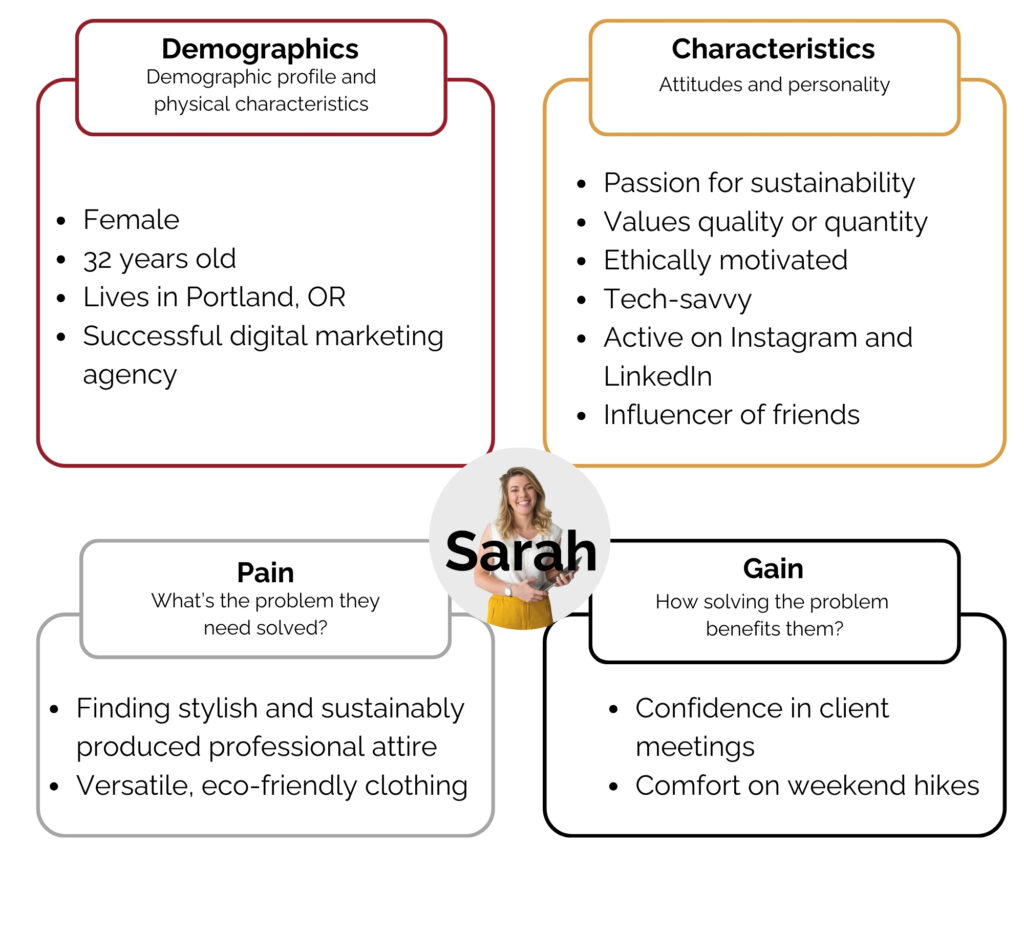
Use the customer avatar framework to define who your customer is and what they’re trying to solve.
Document the Pain component: what frustrates them, what they fear, what’s not working. Then document the Gain component: what success looks like, what relief feels like, the transformation they’ll experience when the problem is solved.
This gives you the raw material, the customer insights that everything else builds on.
Step 2: Use StoryBrand to Shape the Narrative
Now plug those avatar insights into the StoryBrand framework.
Who’s the hero? What do they want? What’s the problem (external, internal, philosophical)? How do you position yourself as the guide with empathy and authority? What’s the simple plan that bridges pain to gain? What are the stakes—success and failure?
This structures your message so it’s narratively clear and emotionally compelling.
Step 3: Build the System Behind the Message
Apply the Outside-In Framework, Objective → Strategy → Plan → Measurement, to create a marketing system that supports the narrative.
Set your objective. Define the strategy that will achieve it. Build the tactical plan: email sequences, content calendar, paid campaigns, and landing pages. Measure what’s working and optimize continuously.
Let me walk through a hypothetical example.
You run a financial planning firm targeting business owners in their 50s who are thinking about retirement but feel overwhelmed by the complexity.
Step 1 (Outside-In avatar):
- Pain: Confused by retirement options, worried they’re behind, frustrated by conflicting advice from different advisors
- Gain: Clear retirement plan, peace of mind, confidence they’ll maintain their lifestyle
Step 2 (StoryBrand narrative):
- Hero: Business owner approaching retirement
- Problem: External (too many investment options), Internal (anxious about making wrong choices), Philosophical (retirement planning shouldn’t be this complicated)
- Guide: You—empathetic (“We see business owners paralyzed by this every day”) and authoritative (“We’ve guided 200+ business owners through retirement”)
- Plan: 1. Attend our retirement webinar, 2. Download a retirement roadmap template, 3. Implement with ongoing support
- Stakes: Success (retire with confidence), Failure (discover at 65 you’re years behind)
Step 3 (Objective → Strategy → Plan → Measurement):
- Objective: 30 qualified consultation bookings in 90 days
- Strategy: Content marketing showing you understand their pain + retargeting to high-intent prospects
- Plan: Weekly blog posts addressing retirement fears, LinkedIn ads targeting 50+ business owners, email nurture sequence with case studies
- Measurement: Traffic, engagement rate, consultation booking rate, qualified lead conversion
Notice how the three work together. Outside-In gives you the customer insights. StoryBrand structures the message. The marketing system is the machine that delivers it at scale.
The Unified Truth Behind Both Frameworks

StoryBrand gives you the narrative. Outside-In gives you the marketing system. Objective → Strategy → Plan → Measurement.
When these work together, marketing stops feeling random and starts feeling inevitable.
The reason people keep telling me Outside-In sounds like StoryBrand isn’t because one copied the other. It’s because both recognize the same fundamental truth: businesses that center their marketing on what customers need win. Businesses that center their marketing on themselves lose.
Marketing that starts with “Here’s what we do” is inside-out thinking. It forces the customer to translate your features into their needs, and most won’t bother.
Marketing that starts with “Here’s what you’re trying to achieve” is outside-in thinking. It meets customers where they are, speaks to their actual problems, and positions your solution as the guide they’ve been looking for.
Your customer is the hero in the story. Your brand is the sherpa guide.
StoryBrand and Outside-In aren’t tactical frameworks. They’re a strategic foundation. And as we like to say, “If it’s not strategic, it’s not marketing.”
Want help applying this to your business? That’s what we do. Schedule a clarity call, and let’s talk about marketing that your customers actually want.
Related Posts
-
The Customer Avatar
A customer avatar brings your best customers into sharp focus, which helps your marketing break through the noise.
-
Long vs Short Content – The Debate
By understanding the benefits of short and long ad copy, you can deploy both with confidence.
-
Outside-In Marketing Meets StoryBrand
An outside-in marketing system built using the StoryBrand framework.
Author: James Hipkin
Since 2010, James Hipkin has built his clients’ businesses with digital marketing. Today, James is passionate about websites and helping the rest of us understand online marketing. His customers value his jargon-free, common-sense approach. “James explains the ins and outs of digital marketing in ways that make sense.”
Use this link to book a meeting time with James.