

Mid-Funnel Marketing: 3 Tactics Every Marketer Should Use
Reading time:
Author:
Updated: August 3, 2026
Your business doesn’t have a marketing problem; it has a mid-funnel marketing problem.
Every audience breaks into four groups. People who don’t know you. People who know you; they have seen an ad or visited your site once. People who get you; they understand what you stand for and how you can help them. People who buy from you; they have crossed the line of trust.
Almost all marketing energy goes to the first, second, and fourth groups. Awareness and lead generation get funded. Sales conversion gets the attention. But the short- and long-term growth opportunity sits in the middle, and almost nobody works that ground.
Go look at your own marketing and ask the question. “What moves someone from knowing you, to getting you, to buying from you?” My bet is that little or no effort goes to the middle of the buyer’s journey. The getting. That’s why I’m telling you that you have a mid-funnel marketing problem.

Get Digital Tips & Tricks Delivered to Your Inbox

Below, I’ll explain the mid-funnel, give you three tactics that do the work there, and show you how to measure it when your analytics were built to count transactions.
Why the Middle Gets Ignored
For decades, businesses could skip the middle and get away with it.
Boomers and Gen X made decisions based on authority, reputation, and brand familiarity. If you looked credible, you got the sale. The middle existed, but you could coast through it.

Millennials and Gen Z changed the rules. They don’t buy on promises. They buy on proof, and they expect to experience your credibility before committing. They research. They compare. They read reviews. They watch how you behave online before they believe a word you say.
The modern buyer’s looping, non-linear behavior means the mid-funnel is no longer a nice-to-have. Now, it’s the ballgame. The straight line from awareness to purchase is gone, and marketing built on the old model is dangerously incomplete.
“Watch what they do, not what they say.” ~ Rachel Maddow
The Mis-Measured Marketing Trap
There’s a second reason the middle gets ignored: your dashboard is hiding it from you.
A CMO recently shared a story on LinkedIn that lays the problem bare.
Her CEO was furious. She had just cut Google Ads spend by 80%. “Are you crazy? Google’s showing us an 8X return on ad spend!”
Then nothing happened. Revenue held. New customer acquisition stayed flat. Google had been capturing branded search demand that already existed. People were already looking for the company. Google just happened to be standing there when they typed the name.
To appease the CEO, she flipped the script and cut Meta spend.
Brand search volume dropped, and revenue fell hard.
Meta was creating demand. Google was harvesting it.
Your dashboard is hiding the importance of the mid-funnel because it’s measuring the harvest and ignoring the cultivation. Generally, dashboards credit the channel that last touched the buyer. They rarely track the channels that made the buyer interested in the first place. You see the harvest. You miss the plowing, fertilizing, and watering that made the harvest possible.
What is Mid-Funnel Marketing?
Mid-funnel marketing is what its name implies. It’s the marketing between first contact and the purchase.
In the mid-funnel, your leads already know what you do. They’ve shown interest in learning more. They’re also evaluating you against all the competitors in your niche. You don’t need to tell them about obvious benefits. They know this. You need to show them the transformation they can expect when they become customers. Do this, and you’ll earn the right to be on their shortlist.
An occasional discount is not mid-funnel marketing. Every activity here should support the buyer’s journey. Deliver value that goes beyond functional benefits, and you’ll attract loyal customers who become advocates.
Most loyalty problems start long before anyone churns, which is why the work you do in the mid-funnel delivers revenue for years. I’ll come back to where I learned that.
Following Prospects Through the Funnel
You understand the marketing funnel. But have you ever considered it through the eyes of your buyer? For them, each stage has a different objective, so it pays to understand their perspective before you start sending them content.
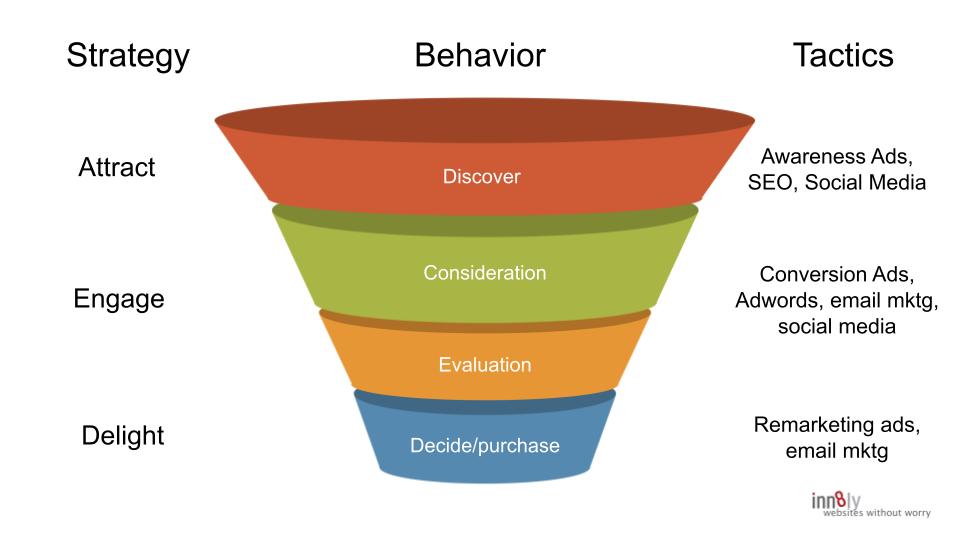
At the top of the funnel, prospects arrive through a referral, a social post, an awareness ad, or a search result. Often it’s the first time they’ve heard of you, so the job is education. They’re discovering, not buying. Social and SEO do the heavy lifting, usually paired with a microtransaction like a free offer in exchange for an email address.
In the middle, your lead has seen the ads or taken the free offer. Now they’re evaluating you against alternatives. The mid-funnel’s job is to make the value proposition clear and create value that goes beyond the functional benefits.
At the bottom, the prospect is ready to commit. The job is removing friction. A clear path to purchase, a strong call to action, and an offer worth acting on. Lower funnel tactics create mutual value for the customer and the business.
Skipping to the bottom doesn’t work. The most generous discount in the world lands flat on someone who never understood what your product was worth. That’s the argument for the middle, and it’s why a modern funnel balances traffic, trust, and value rather than optimizing any one of them.
For the full picture, read The Marketing Funnel Explained.
What a Mid-Funnel Lead Looks Like
Naming the stages is easy. Recognizing the person standing in one of them is harder, and getting it wrong costs you in both directions.
A mid-funnel lead announces themselves through behavior rather than intent. They come back to the site more than once. They open several emails instead of one. They like and comment on social posts. They read a case study all the way through. They visit the pricing page without contacting anyone. They attend the webinar and stay to the end.
None of that is a buying signal. All of it is an evaluating signal.
The common mistake is treating every raised hand as sales-ready and routing it straight to a pitch. The prospect isn’t refusing to buy. They’re still deciding whether you meet their needs. A sales call invitation interrupts a journey they haven’t finished.
But don’t get carried away. Too much is just as costly. Leads can get stuck in a nurture sequence because nobody defined what “ready” looks like. They stay warm for a while, then go cold, and the effort that warmed them is wasted. Recognize that it’s their journey, but don’t be afraid to ask for the sale. It’s a commercial relationship.
Lead scoring built on behavior rather than demographics solves this problem. Weight the actions that correlate with your buyer’s journey. Pricing-page visits usually mean more than a whitepaper download. Both are mid-funnel behavior signals, but the pricing page visit indicates that they are closer to the bottom of the funnel. Three email opens in a week mean more than thirty over a year. Use signals like these to define the threshold where a lead moves to sales, and be willing to change it when the data says you set it wrong.
The Three Questions the Middle Answers
The mid-funnel is the transition from curiosity to conviction. It’s where prospects decide whether they trust you enough to move forward. And it needs to answer three questions they will never ask out loud.
Do you understand my problem?
Have you solved it for someone like me?
Can I believe you?
None of these are yes-or-no questions. They’re trust builders, and trust compounds across many small exchanges. Think of them as microtransactions, the small investments that add up to a relationship.
“The aim of marketing is to know and understand the customer so well the product or service fits him and sells itself.” ~ Peter Drucker
Peter Drucker wrote this decades before anyone drew a funnel diagram. It’s still valid today because it describes the middle better than most modern frameworks.
3 Mid-Funnel Marketing Tactics Every Marketer Should Know
Now that the dead horse is thoroughly beaten, we’ll talk about three tactics that do the work and show how they answer the questions above.
None of them is exotic. You’ve seen them before and are likely using some or all of them, but by understanding how they fit into the mid-funnel marketing strategy, you can use them more effectively.
1. Case Studies and Customer Success Stories
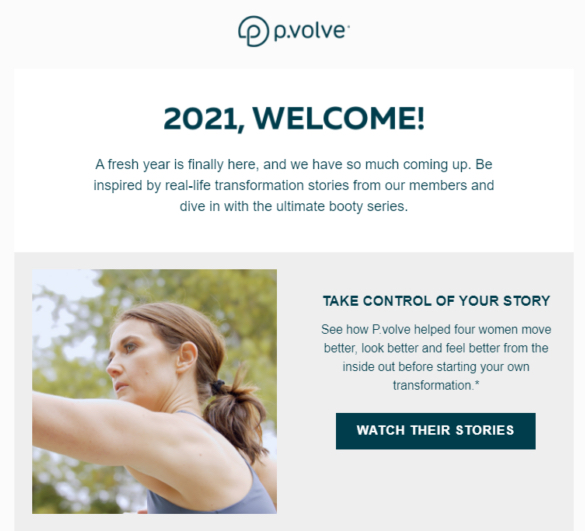
Your prospects have every piece of information they want at their fingertips. If they haven’t heard of you, they will search for reviews and social proof to find out whether your product delivers what you claim.
Case studies and testimonials provide the buyer with reasons to believe. Feature them prominently on your website and in your email campaigns.
Can I believe you?
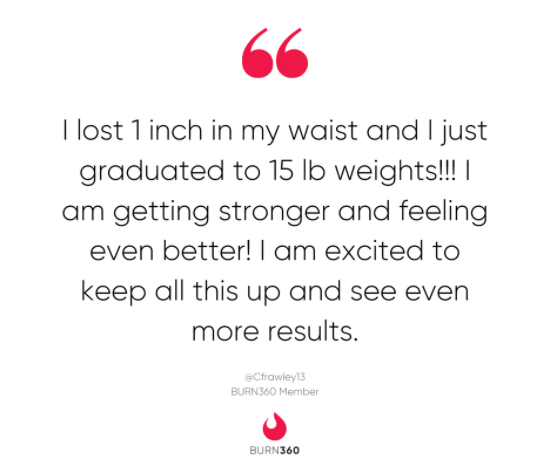
Specific numbers work best, because they let a prospect picture their own result. Each story should name a specific problem the customer had and show how you solved it. Show the immediate benefit and then the benefit of the benefit. A fitness client lost weight. That’s the benefit. She felt stronger, had more energy, and stopped dreading photographs. That’s the benefit of the benefit, and it’s the part that sells.
Do you understand my problem?
One rule governs all of it. The story is always the customer’s story, never yours. This is an outside-in exercise.
Have you solved it for someone like me?
2. How-To Articles and Other Instructional Content
Once a prospect has seen your case studies, they want proof that you know what you’re talking about. Instructional content is how you supply it.
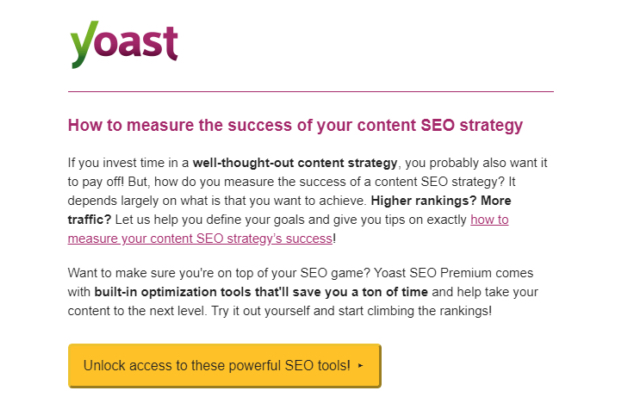
How-to articles, FAQs, fact sheets, checklists, and infographics all belong here. Anything that answers a real customer question builds trust and moves someone further along. Include relevant statistics and link out to high-authority sources. Sending a reader somewhere useful signals confidence, and confidence reads as expertise.
The bar is higher than it used to be. Publishing a definition of a term your reader already knows won’t do it. Teach them something they couldn’t have worked out on their own.
3. Product Guides, Reviews, and Comparisons
Eventually your prospect will research similar companies to make sure they’re getting the best value. At this point they’re convinced they need a product. They just don’t know whose.
Meet that behavior head-on. Comparison content focused on features, price, and value shows how you stack up, and the transparency builds trust. You’re still in control of the content, so highlight your strengths and be honest about where you’re not the right fit. Naming the customer you’re wrong for is one of the fastest ways to convince the customer you’re right for.
Product guides clear up doubts before the final decision. Ratings and reviews provide objective evidence.
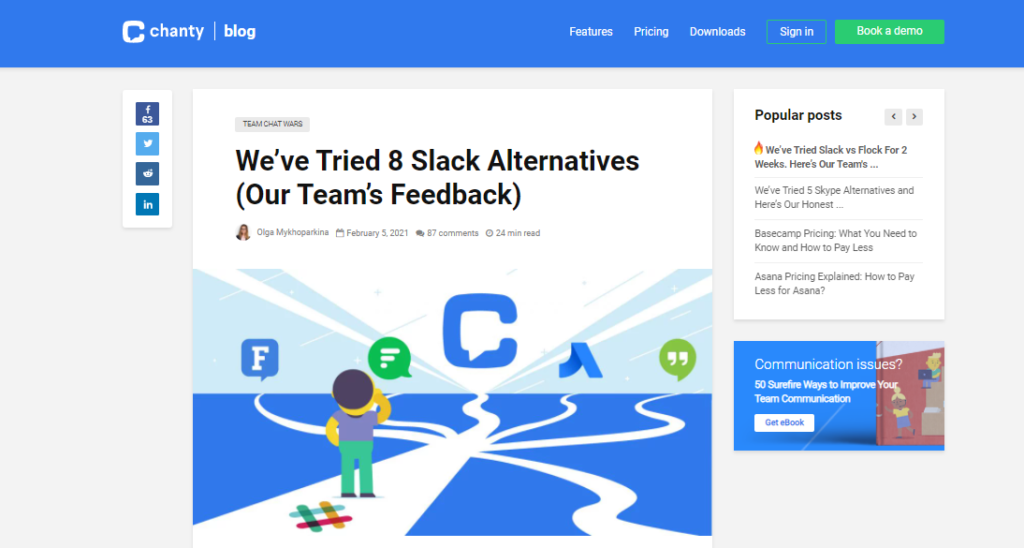
Mid-Funnel Content Types Worth Knowing
The three tactics above are the backbone. There are several other formats that earn their keep in the middle.
Expert webinars and short workshops let prospects experience your thinking and self-qualify before either of you spends real time. How-to videos work for deep dives, step-by-step instruction, and product demonstrations, which is where a lot of mid-funnel research happens now. Streaming and YouTube are worth looking at for this.
Interactive assessments and diagnostic quizzes let prospects convince themselves that your solution fits their needs. Nobody argues with a conclusion they reached on their own. Trust becomes belief, and belief is what a sales conversation runs on.
Calculators and useful interactive tools like templates or models are another class of mid-funnel tactics that can build trust.
Getting the Content in Front of the Right People
Making the content is half the job. The other half is delivery.
Personalization Built on the Avatar and Journey Map
Consumers see thousands of marketing messages a day. Generic content contributes to the noise. Content that speaks to someone’s specific situation breaks through the noise. Speaking to a prospect’s specific situation is achievable when your customer avatar is clear, and your buyer’s journey is mapped. Used together, your message feels built for the person reading it.
We tested exactly this at Wells Fargo, on home equity line of credit (HELOC) direct mail, and the result still surprises me.
Rather than segmenting the customer database the usual way, by income or age or home value, we segmented it by attitude toward debt. Inside-out segmentation sorts people by what the company can see. Outside-in sorts them by what they believe.
Some people treat borrowing as a tool. Some think about it as a personal failure. Some are simply afraid of it. Three different prospects who need three different arguments, and not one of those differences shows up in a demographic file. We built the models from the customer base, then used them to segment a cold prospect list.
Every group received the same product and offer. The only variable was the creative approach, which was written to match how that group thought about debt.
The worst-performing cell converted at double the rate of the control.
That’s what personalization can accomplish when it’s done strategically. I’ve written more about this in Marketing for People Who Don’t Like Marketing.
People-like-you pathways on your home page are a smaller version of the same idea. Cards call out to subsegments of your audience and invite a click. When someone clicks through to a pathway’s landing page, you’ve learned who they are, and they’ve given you permission to tell them more. The landing page can then be written for exactly that person, because you know which button they pressed.
Email Sequences That Nurture
Email belongs at the center of your mid-funnel strategy, and sequences do the work.
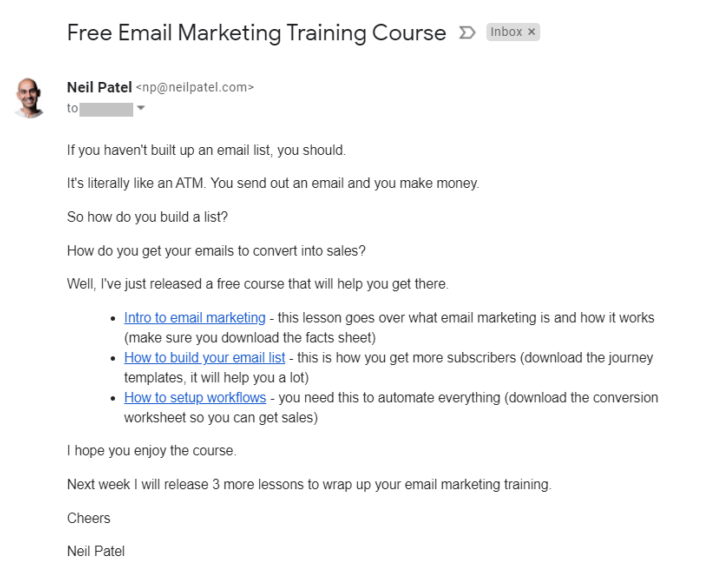
A sequence that performs is built around the prospect’s decision-making, not your product launch calendar.
Open with a warm welcome that sets expectations and delivers something useful immediately. Value first.
Share insights that speak to real pain points. Introduce your solution in the context of their problem.
Bring in social proof early and often. Toward the end, give people a reason to take action, whether that’s a time-limited offer or an honest account of what waiting costs them.
Drip campaigns and triggered emails both belong in the mix, but they do different jobs.
A drip campaign is a lazy river. Slow and steady. Leads climb in and get carried along. Each touchpoint is a reminder that you are there for them. The journey is calm and controlled, which is exactly what you want for steady nurturing over months.
Triggered emails respond to what someone does. If a prospect clicks a link in a lazy river email to read a white paper, they’ve told you they’re ready to move. Answer that signal with an email that’s tied to the link they chose. Balance urgency with convenience: give them a reason to act and make acting easy.
Use both. Drip for consistent nurturing, triggers for the moments when someone raises a hand.
Retargeting That Adds Value
Busy people don’t mind being reminded. That single fact is what makes retargeting work in the middle of the funnel. You’re not interrupting someone. You’re supporting a decision they’ve already started making.
Retargeting works for four reasons. You’re reaching people who have already shown interest. Your ads arrive while your solution is still fresh in mind. Repeated touchpoints reinforce the message. And you’re encouraging interested prospects instead of broadcasting to strangers.
The content matters as much as the targeting. Repeating your offer to someone who already saw it wastes the impression. You know what they saw. Show them why it matters. Segment your lists by the pages people visited or the links they clicked. Match the message to where they are, with educational content for the consideration stage and product detail for people close to deciding. Every ad needs a clear next step.
Your avatar and journey map also decide which platforms are worth buying. Facebook and Instagram suit audiences that respond to social proof and lifestyle content. LinkedIn is usually the answer for B2B, where prospects value industry insight. Pinterest fits research-driven visual audiences, and its discovery behavior mirrors the consideration stage. YouTube earns its place when demonstrations and how-to content drive the decision.
Where the Middle Goes Wrong
When the mid-funnel falls down, the failures can usually be traced to one or a combination of four things.
Generic content is the first and the most common problem. Content written for everyone speaks to no one, and it becomes another piece of the noise your prospect is already filtering out.
Volume is the second. Some marketers discover nurture and then bury people in it. Too many messages, too many choices, too many calls to action. The prospect stops seeing what you’re sending, and unsubscribing is the polite version of what they’re thinking.
Timing is the third, and it’s the subtle one. A prospect that’s just entered the market isn’t looking for a detailed comparison guide. Equally, a problem-awareness article annoys someone who’s choosing between two vendors. Preventing mismatches like this is the journey map’s job.
A weak value proposition is the fourth, and no amount of nurture rescues it. If your content never makes clear how you solve the problem better than the alternative, you’ve spent months being helpful and given the prospect no reason to choose you. Being liked is not the same as being chosen.
What this Looked Like at Sprint
We almost turned the business down.
This was the long-distance wars, back when your phone was attached to a wall. AT&T was mailing prospects checks for fifty to a hundred dollars just to switch carriers. MCI had Friends and Family. Churn was at staggering levels. The three national players were buying the same customers off each other, over and over, and calling it marketing.
I was a VP at an agency in Chicago when the Sprint RFP came in. We ran our own analysis on the data they sent us, and it stopped us cold. Sprint was losing customers faster than it was winning them. On that trajectory, the consumer long-distance business had roughly eighteen months before the math caught up with it.
We pitched the business anyway, partly because I had seen the shape of the answer before.
A few years earlier I had done something similar for Rover Cars across Europe. Rover had awareness it wasn’t converting, so instead of buying more of it we sent in-depth comparison guides to people who were already shopping. Direct mail, because in that era that’s what we had. Dealers started reporting that showroom visitors arrived informed and closer to deciding, and acquisition costs came down. It worked. But Rover was a small enough player in a big enough market that it was easy for anyone who wanted to call it a fluke.
Sprint was the chance to find out whether it was.
We opened by recommending research instead of a campaign.
Dr. Stephen Epley, founder of Epley Market Research and Consulting, led the loyalty study. Before he presented a single finding, in the preamble nobody was taking notes on, he said something I have never been able to unhear.
“In my experience, 90% of loyalty problems can be traced to a flawed sales process.”
Everyone in that room had been treating churn as a retention problem, which meant it belonged to the people at the end of the funnel. Epley was saying the damage was done at the beginning, by how the customer was acquired and what they understood when they arrived.
That line didn’t teach me something new so much as name something I’d already watched happen at Rover without having the words for it. It’s the difference between noticing a pattern and being able to argue for it in a boardroom.
Next we told them they were spending too much on their customer marketing.
What we built ran against everything the category was doing. Instead of spending more to reach everyone, we spent less and talked to fewer people. We focused the marketing on their best customers, not all customers.
Then we split the communication into two tiers.
The first tier carried no sales content. None at all. Its entire job was helping the best customers understand what they were already paying for and how to use it well. Relationship equity, built by being useful and asking for nothing.
The second tier sold, but only to people whose behavior said they were ready, and only about the thing their behavior pointed toward. Highly targeted, driven by customer behavior. Have you ever seen a direct mail campaign convert in the high teens? I have.
It took a year to get everything built and running.
At the end of the second year, I asked Sprint’s head of marketing how it had gone. He told me they had seen 20% revenue growth on a $2 billion base, and that market share had not moved. He attributed the growth to our program.
Sit with that for a moment. Market share didn’t move, which means Sprint didn’t take those customers from AT&T or MCI. Four hundred million dollars of growth came from people who were already Sprint customers, who now understood the products better and used more of them.
There is nowhere else that money could have come from. It came from the middle.
I ran versions of that two-tier structure for years afterward, at Nestlé and elsewhere, across categories that had nothing in common with long-distance calling or cars.
Today the same structure is an email sequence and retargeting ads. The tools keep changing. The structure hasn’t needed to.
How to Measure Mid-Funnel Marketing
Traditional analytics are built to track transactions, which is why mid-funnel performance rarely shows up in them. You need different methods.
Geo-split tests are the bluntest tool. Cut spend in one region and compare total revenue against a region you left alone. If revenue holds, that channel was collecting credit rather than creating growth.
Holdout testing works the same way across channels. The LinkedIn story I mentioned above is an example of this method. Pause one and watch whether overall sales move. The silence often tells you more than the reporting.
Branded versus non-branded search volume is another, often overlooked, mid-funnel signal. When more people search for you by name, they already trust you enough to come looking. That’s the middle working.
Engagement and direct traffic tell a similar story. People who type your domain, engage with a remarketing ad, or click through from an email are warming up.
The Measurement Trick Almost Nobody Uses
The most useful measurement tool costs nothing. Talk to your new customers.
What finally convinced you? How long did you consider us before buying? Walk me through the steps you took before deciding.
Post-sale conversations expose patterns your analytics cannot see. You’ll find out which emails got read, which case study made the difference, and which piece of content changed someone’s mind. You’ll hear the words they use to describe you and your competitors, which is free copy for your next campaign.
Dashboards tell you what happened. Customers tell you why.
That gap is why we built Marketing Sage Advantage. It analyzes customer interviews and delivers an objective avatar and journey map. With an avatar and journey map, your messaging knows what pain to poke, the transformation to promise, and when to do what.
The Mid-Funnel Payoff
Mid-funnel marketing compounds trust. It reduces lead drop-off, shortens sales cycles, lowers acquisition costs over time, and improves customer lifetime value. It also creates advocates because customers who trust you share your message and vouch for you.
The efficiency case is easy to see, and you can calculate it in about two minutes using numbers already sitting in your analytics.
Take last month’s traffic and multiply it by your bounce rate. That group is what I call the null set. The customers you never met. Everyone who arrived, looked, and left without doing anything at all. You paid to bring every one of them, and you will never know which of them was the customer you’d have given anything to win.
Now multiply your bounce rate by last month’s total marketing spend. Ads, content, agency fees, your team’s hours. That’s what the null set cost you.
Put real figures on it. Twenty thousand dollars of marketing brings 8,000 visitors, so each one costs $2.50. Fifty-five percent of them bounce. You just paid eleven thousand dollars to deliver 4,400 people to a page that failed to continue the conversation your marketing started.
That eleven thousand appears nowhere in your books as a loss. It gets absorbed into “marketing” and forgotten.
That number is also the clearest picture you will get of a missing middle. The null set is what an absent mid-funnel looks like in your analytics. Those people knew you. They showed up. Nothing was there to move them from knowing you to getting you, so they left. Shrink that group by a few points, and the same traffic and the same budget produce more revenue.
Everything above and below the middle costs money. The middle costs attention.
There’s a second advantage that’s harder to copy. While competitors shout for attention and scramble to close, you’re building trust in the middle where nobody’s watching. That’s where differentiation happens, in how people come to understand your offer rather than in the offer itself. Trust is competitive insulation. Like an iceberg, most of it sits below the waterline, invisible to your competition.
When the middle works, the purchase stops feeling like a sale. It becomes the next logical step in the customer’s journey. Get the right customer for the right reason.
Once the middle is doing its job, your website’s job changes. Visitors start arriving as people who have largely decided and want to check their thinking. Conversion is the wrong word for what the site does at that point. Its job is confirmation, the way you pull up a restaurant’s menu before going somewhere a friend recommended. You already trust the recommendation. You’re finding out whether you’ll fit.
That explains something I watch businesses do constantly. Conversions flatten, so they sweeten the offer. More urgent, more compelling, more of them. It almost never works, because the offer is rarely the problem.
Bridging the Chasm
Geoffrey Moore’s Crossing the Chasm became required reading in Silicon Valley because it explained why most startups die in the gap between early adopters and the early majority. The problem was technology adoption, and getting mainstream buyers to trust something new.
The new chasm is the mid-funnel. It’s where marketing built for boomers loses an audience that grew up with the internet.
Your prospects aren’t all in the same place. Some barely know you exist. Others are ready to buy. Most are stuck somewhere in between, working out whether you’re worth their trust.
And you aren’t alone. Most of your competitors are skipping the middle too. That’s your opening.
The best marketers I know have stopped asking how to get more leads. They ask how to help people understand them better. This is a mid-funnel question, and answering it changes everything.
Where to Start on Monday
Reading this changes nothing. Three steps do, and none of them require budget approval.
Pull up your last twenty closed deals and find out what they read before they bought. Ask five of them directly. You will learn more in those five conversations than in a quarter of dashboard review, and you’ll find out which of your existing content already does mid-funnel work you never credited it for.
Audit what you already have against one question: does this help someone decide, or does it just describe what we sell? Most businesses find they have plenty of top-of-funnel content, a pricing page, and nothing in between. Or what they have isn’t based on anything. It’s there because, “we need more white papers.”
Build one case study properly. The problem, the stakes, what you did, and what changed. One good one beats six thin ones, and it feeds your email sequence, your sales calls, and your comparison content.
If you want to see what a focused mid-funnel strategy looks like for your business, go to VIPChatWithJames.com and let’s map it together.
Related Posts
-
Why Your Marketing Isn’t Working
Discover how marketing momentum breaks the Sisyphean cycle and watch your business grow.
-
Why Marketing Breaks
The real problem marketers face isn’t too much activity; it’s too little connectivity.
Author: James Hipkin
Since 2010, James Hipkin has built his clients’ businesses with digital marketing. Today, James is passionate about websites and helping the rest of us understand online marketing. His customers value his jargon-free, common-sense approach. “James explains the ins and outs of digital marketing in ways that make sense.”
Use this link to book a meeting time with James.